
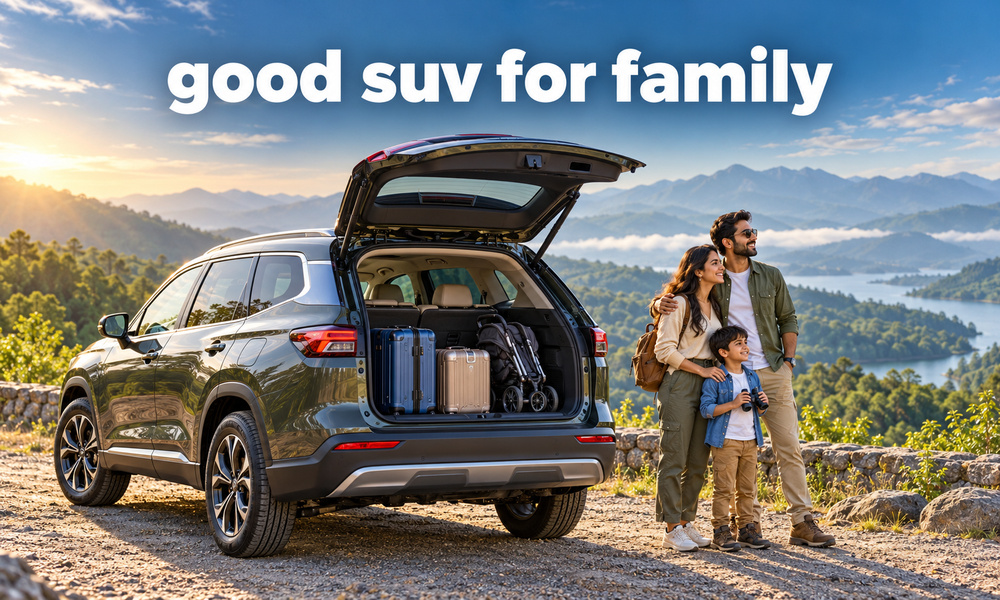
Choosing a good suv for family use is less about finding one universally perfect model and more about matching the vehicle to the way your household actually lives. A family with one young child may be perfectly comfortable in a compact two-row SUV, while a household with three children, grandparents, sports gear, or frequent road trips may need a true three-row model with easier third-row access and more cargo space.
The 2026 U.S. market offers family SUVs at almost every price point. Current examples range from the Chevrolet Trax, which starts at $23,495, to efficient hybrids such as the Honda CR-V Hybrid and Hyundai Palisade Hybrid, roomy three-row choices such as the Toyota Grand Highlander, and full-size vehicles such as the Chevrolet Suburban. The right answer depends on family size, child-seat needs, budget, parking space, fuel costs, towing, and how often every seat is actually occupied.
What Makes an SUV Good for a Family?
A strong family SUV should reduce everyday friction. That means doors that open wide enough for child-seat loading, a second row that can handle boosters or rear-facing seats, useful storage for bags and snacks, enough cargo room for strollers or sports equipment, and climate controls that reach rear passengers.
Safety matters, but it should be evaluated with more detail than simply counting airbags. Crash-test performance, automatic emergency braking, blind-spot monitoring, rear cross-traffic alerts, good headlights, child-seat anchor access, and rear-seat reminder systems can all affect family use. The Insurance Institute for Highway Safety also evaluates LATCH ease of use and rear-occupant protection, which can be especially relevant to parents.
Do You Need a Two-Row or Three-Row SUV?
For families of three or four, a two-row SUV is often the easiest and most efficient solution. Models such as the Honda CR-V Hybrid can provide enough rear-seat room for children while keeping the exterior dimensions manageable for city parking, garages, and school drop-off lines.
Three-row SUVs make more sense when you regularly carry five or more people, carpool, travel with grandparents, or need flexibility for friends and relatives. The important word is regularly. If the third row will be used only a few times each year, a larger vehicle may create higher purchase, fuel, tire, and insurance costs for space that usually sits empty.
Also test third-row access with the second-row seat positioned as you would actually use it. A three-row SUV may technically seat seven or eight people while still making it difficult to reach the rear seats with child seats installed in the second row.
Which 2026 Family SUVs Fit Different Needs?
| 2026 SUV | Seats | Starting Price | Key Family Strength | Efficiency / Space Highlight |
| Chevrolet Trax | 5 | $23,495 | Low-cost urban family SUV | 28 mpg city; 38.7 in rear legroom |
| Honda CR-V Hybrid | 5 | $35,630 | Efficient everyday family use | 204-hp hybrid; compact footprint |
| Hyundai Palisade Hybrid | 7 or 8 | $44,160 | Three-row space plus hybrid economy | Up to 34 mpg combined FWD |
| Toyota Grand Highlander | Up to 8 | $42,260 | Roomy three-row packaging | Up to 97.5 cu ft cargo |
| Chevrolet Suburban | Up to 9 | $63,700 | Maximum passenger and cargo space | Up to 144.5 cu ft cargo |
Starting prices shown are current manufacturer starting MSRPs where available and exclude destination, taxes, registration, options, and dealer charges. Pricing and specifications can change.
Is the Chevrolet Trax Enough SUV for a Small Family?
The Chevrolet Trax is one of the least expensive new SUVs in the U.S. market, with a current starting MSRP of $23,495. It seats five and provides 38.7 inches of rear-seat legroom, which is useful for a vehicle at this price level. Standard wireless Apple CarPlay, wireless Android Auto, and Chevy Safety Assist also make the entry model feel less basic than its price suggests.
The limitation is that the Trax is still a small, front-wheel-drive SUV. Families who routinely travel with large strollers, multiple car seats, bulky sports gear, or winter equipment may outgrow it quickly. It can be a smart fit for one-child households, urban families, or buyers who value a low purchase price over maximum cargo and passenger capacity.
Why Does the Honda CR-V Hybrid Work Well for Many Families?
The Honda CR-V Hybrid is a strong middle-ground choice because it combines a manageable exterior size with a roomy cabin and efficient hybrid powertrain. Honda currently lists the Sport Hybrid from $35,630, with a 204-hp two-motor hybrid system and available all-wheel drive.
For families that do not need a third row, this kind of compact SUV can be easier to live with than a larger model. It is simpler to park, easier to maneuver in crowded school lots, and generally less expensive to fuel and replace tires on than a large three-row SUV.
The CR-V Hybrid is especially logical for parents who commute daily and accumulate significant annual mileage. The main trade-off is that five seats are all you get, so the vehicle may feel limiting once regular carpools or a third child enter the picture.
Is the Hyundai Palisade Hybrid a Good Three-Row Family Choice?
The 2026 Hyundai Palisade Hybrid is designed for families that need real three-row capacity but do not want full-size-SUV fuel consumption. Hyundai lists it from $44,160, and front-wheel-drive versions can achieve up to 34 mpg combined depending on trim. All-wheel-drive hybrid models are rated at 29 mpg combined.
The Palisade can be configured for seven or eight passengers and offers family-oriented technology, large displays, available relaxation-style seating, rear climate coverage, and numerous convenience features. In current IIHS testing, 2026 Palisades built after November 2025 earn Top Safety Pick+ status, and the model receives a Good+ rating for LATCH ease of use.
Parents comparing safety performance can review the latest IIHS vehicle ratings before choosing a specific model and build date.
When Does the Toyota Grand Highlander Make More Sense?
The Toyota Grand Highlander is useful for families who want more third-row and cargo space than a typical midsize crossover without jumping to a truck-based full-size SUV. Toyota lists a $42,260 starting MSRP for 2026, seating for up to eight, and as much as 97.5 cubic feet of cargo space with the rear seats folded.
It is also available with gas, Hybrid, and Hybrid MAX powertrains. That gives buyers more flexibility to prioritize purchase price, fuel economy, or stronger performance. Families that carry adults in the third row more often should physically sit in that row during a test drive because published seating capacity does not tell you how comfortable a vehicle will be on a two-hour trip.
Who Actually Needs a Chevrolet Suburban?
The Chevrolet Suburban makes sense when ordinary midsize three-row SUVs are simply not large enough. Chevrolet lists up to 144.5 cubic feet of maximum cargo volume, and the Suburban can be configured to carry a large family while still leaving useful space for luggage.
That capability comes with costs. The 2026 Suburban starts at $63,700, requires more parking space, uses larger and more expensive tires, and generally consumes more fuel than compact and midsize alternatives. It is best suited to families that genuinely use its passenger volume, towing capacity, or cargo area rather than buyers who only want the appearance of a large SUV.
How Important Are Car-Seat Anchors and Second-Row Access?
For families with babies and younger children, child-seat compatibility can matter more than horsepower or touchscreen size. Lower anchors that are buried deep in the seat cushion can make daily installation frustrating, and a wide center console or narrow rear bench can make it difficult to fit three child seats across.
Bring your own rear-facing seat, forward-facing seat, or booster to the dealership if possible. Check whether the front passenger still has acceptable legroom with a rear-facing seat installed behind them. Also verify that a second-row seat can still slide or tilt enough to reach the third row if another child seat is installed nearby.
NHTSA recommends choosing a restraint based on the child’s age and size, following both the seat and vehicle instructions, and keeping children in the back seat at least through age 12. Its car-seat and booster-seat guidance also includes installation help and inspection resources.
What Safety Features Should a Family SUV Have?
Modern family SUVs should ideally include automatic emergency braking, pedestrian detection, blind-spot monitoring, rear cross-traffic alerts, lane-departure warning, lane-keeping assistance, and adaptive cruise control. Rear automatic braking can also be valuable around driveways and busy parking areas.
Do not assume every safety feature is standard simply because it appears in an advertisement. Some trims bundle blind-spot systems, surround-view cameras, or rear automatic braking into higher packages. Check the exact window sticker or manufacturer build sheet for the vehicle you are considering.
Crash-test ratings should also be reviewed by model year because redesigns, running production changes, and different headlight systems can affect ratings. Larger vehicles generally provide more physical crash protection than smaller ones, but size alone does not guarantee good crash-test performance.
How Much Cargo Space Does a Family Really Need?
Cargo figures can be misleading because the maximum number usually assumes the rear seats are folded. For family shopping, the most important number may be cargo volume with every seat you regularly use still upright.
A compact SUV may have plenty of maximum cargo room but struggle with a stroller and groceries when the second row is occupied. A three-row SUV may claim huge maximum capacity while leaving limited luggage space behind the third row. If your family takes road trips, measure the space in the configuration you will actually use.
Also look for a low load floor, wide hatch opening, underfloor storage, grocery-bag hooks, flat-folding rear seats, and a power liftgate. These everyday details can matter more than a small difference in published cubic feet.
Should a Family SUV Have AWD?
All-wheel drive can be useful for families living in snowy regions, driving steep gravel roads, or visiting ski areas and rural properties. It can improve traction when accelerating on slippery surfaces, but it does not shorten braking distance on ice and should not be treated as a replacement for appropriate tires.
Families in warm climates who spend nearly all their time on paved roads may be better served by front-wheel drive. It usually costs less, can improve fuel economy, and removes some drivetrain weight and complexity. The best answer depends on where you live rather than on the idea that AWD is automatically better.
How Much Should Fuel Economy Matter for a Family SUV?
Fuel economy becomes more important as annual mileage increases. A family driving 20,000 miles each year can spend thousands more over the ownership period than a household that drives only 7,000 miles annually, even if both vehicles cost the same to buy.
This is why hybrid models such as the CR-V Hybrid and Palisade Hybrid can make sense for families that spend a lot of time commuting or running school and activity routes. However, a more efficient model is not automatically the cheapest overall choice if it has a much higher purchase price or requires a trim level you do not need.
Compare expected fuel costs using your actual annual mileage and local fuel prices rather than focusing on a single EPA number. Also remember that highway-heavy driving, cold weather, roof boxes, towing, and aggressive acceleration can reduce real-world economy.
Are Hybrids and EVs Practical for Family Use?
Hybrids are easy to adopt because they refuel like conventional gasoline vehicles and require no home charger. They can be especially attractive for suburban families with high annual mileage and lots of stop-and-go driving.
Electric SUVs can work very well for families with reliable home charging, predictable daily driving, and access to fast chargers on common road-trip routes. The main questions are charging convenience, winter range, towing needs, and whether charging stops fit your travel routine.
If your household frequently drives long distances through areas with limited charging infrastructure, a hybrid may offer a simpler transition while still reducing fuel use.
What Family-Friendly Features Are Actually Worth Paying For?
Some options sound luxurious but quickly become everyday necessities. A power liftgate is useful when carrying children or groceries. Rear sunshades can help younger passengers. Multiple USB-C ports reduce arguments over charging. Separate rear climate controls are valuable in three-row vehicles, especially in hot states.
A 360-degree camera can make a large SUV much easier to park. Memory seats help when two adults regularly share the vehicle. Captain’s chairs make third-row access easier, while a second-row bench increases maximum seating capacity. The correct choice depends on whether you prioritize easy movement through the cabin or the ability to carry eight people.
How Should You Compare Family SUVs by Budget?
| Budget Range | SUV Type to Consider | Typical Family Fit | Main Trade-Off |
| Under $30,000 | Subcompact / small crossover | One child, urban use, second vehicle | Less cargo and no third row |
| $30,000-$45,000 | Compact hybrid or value three-row SUV | Most families of 3-5 | Third-row choices may be limited |
| $45,000-$60,000 | Well-equipped three-row midsize SUV | Families needing 6-8 seats | Higher fuel, tire, and insurance costs |
| $60,000+ | Full-size or luxury three-row SUV | Large families, towing, maximum cargo | Parking size and ownership cost |
Your maximum vehicle budget should leave room for sales tax, registration, insurance, financing interest, fuel, maintenance, tires, and unexpected repairs. A larger SUV can cost substantially more to own even when the monthly payment looks similar because of a longer loan term.
What Should You Test During a Family-SUV Test Drive?
Do not test-drive a family SUV alone if possible. Bring the people and equipment that will use it. Install at least one child seat, place a stroller or common cargo item in the rear, and have adults sit in the second and third rows.
Check outward visibility, door opening size, step-in height, rear climate airflow, cupholders, USB ports, cabin storage, seat-folding effort, hatch height, backup-camera clarity, parking-sensor behavior, and how easy it is to hear children from the front seats. A vehicle that looks spacious on paper can feel awkward once your actual family gear is inside.
Drive over broken pavement, make a tight parking maneuver, merge onto a highway, and test braking response. Family vehicles spend far more time on ordinary roads than on magazine test tracks, so comfort and ease of use should carry significant weight.
What Questions Should You Ask Before Buying?
Ask whether the advertised price includes mandatory accessories, whether the exact trim has all of the driver-assistance features you expect, whether there is a spare tire or only a repair kit, and whether the second-row configuration is a bench or captain’s chairs.
For hybrids and EVs, ask about battery warranty coverage. For large SUVs, check towing equipment and payload if you expect to carry passengers and tow at the same time. For any new vehicle, confirm destination charges and ask for a complete out-the-door quote before discussing monthly payment.
Frequently Asked Questions About Choosing a Family SUV
What is a good SUV for a family of four?
A compact two-row SUV such as a Honda CR-V Hybrid can be enough for many families of four, especially if regular third-row seating is not needed. The right choice depends on child-seat size, cargo requirements, and how often you travel with additional passengers.
What SUV is good for a family of six?
A three-row midsize SUV is usually the most practical starting point. Models such as the Hyundai Palisade Hybrid or Toyota Grand Highlander provide seven- or eight-passenger configurations without the size of a full-size SUV.
Do families need a third-row SUV?
Not always. A third row is valuable when it will be used regularly. If it is only needed a few times each year, a roomier two-row SUV may cost less to buy and operate.
What is the most affordable family SUV?
Among current 2026 examples in Car and Driver’s family-SUV ranking, the Chevrolet Trax is the least expensive, with a manufacturer starting MSRP of $23,495.
Which family SUV gets good gas mileage?
Hybrid compact and midsize SUVs generally provide the strongest gasoline fuel economy. The 2026 Hyundai Palisade Hybrid can reach 34 mpg combined in certain front-wheel-drive configurations, while the Honda CR-V Hybrid is also designed around high everyday efficiency.
Is a full-size SUV better for a large family?
It can be, especially when you need to carry many passengers and luggage at the same time. The trade-offs are purchase price, fuel consumption, parking difficulty, and higher ownership costs.
What should parents check before buying an SUV?
Check child-seat fit, LATCH access, second-row width, third-row access, rear climate coverage, cargo space with occupied seats, crash-test results, and the exact standard safety equipment on the trim you plan to buy.
Final Thoughts
A good family SUV is the one that fits the people, equipment, roads, and budget in your real life. Smaller households can save money and fuel with a compact model such as the Trax or CR-V Hybrid. Families that regularly use three rows should focus more closely on the Palisade Hybrid, Grand Highlander, and similar midsize options. Households that need maximum cargo space, nine-seat capability, or heavy towing may have a legitimate reason to move up to a Suburban-sized vehicle.
Before buying, evaluate safety ratings, install your actual child seats, test the third row, load common family gear, and compare the full ownership cost rather than only the monthly payment. That process is far more useful than choosing an SUV because it is the largest model you can afford or because one feature looks impressive in an advertisement.
The best family purchase is usually the smallest vehicle that comfortably handles your normal passenger and cargo needs, with enough flexibility for the trips and life changes you realistically expect during the years you plan to own it.